Auto-Translate
Measurement Values Explained
Learn about PAR, PPFD, DLI, Illuminance, and CCT

Photone allows you to measure different properties of light. All measurements (except CCT) are light intensity measurements. This means they indicate how much light reaches a surface at any given time.
PAR
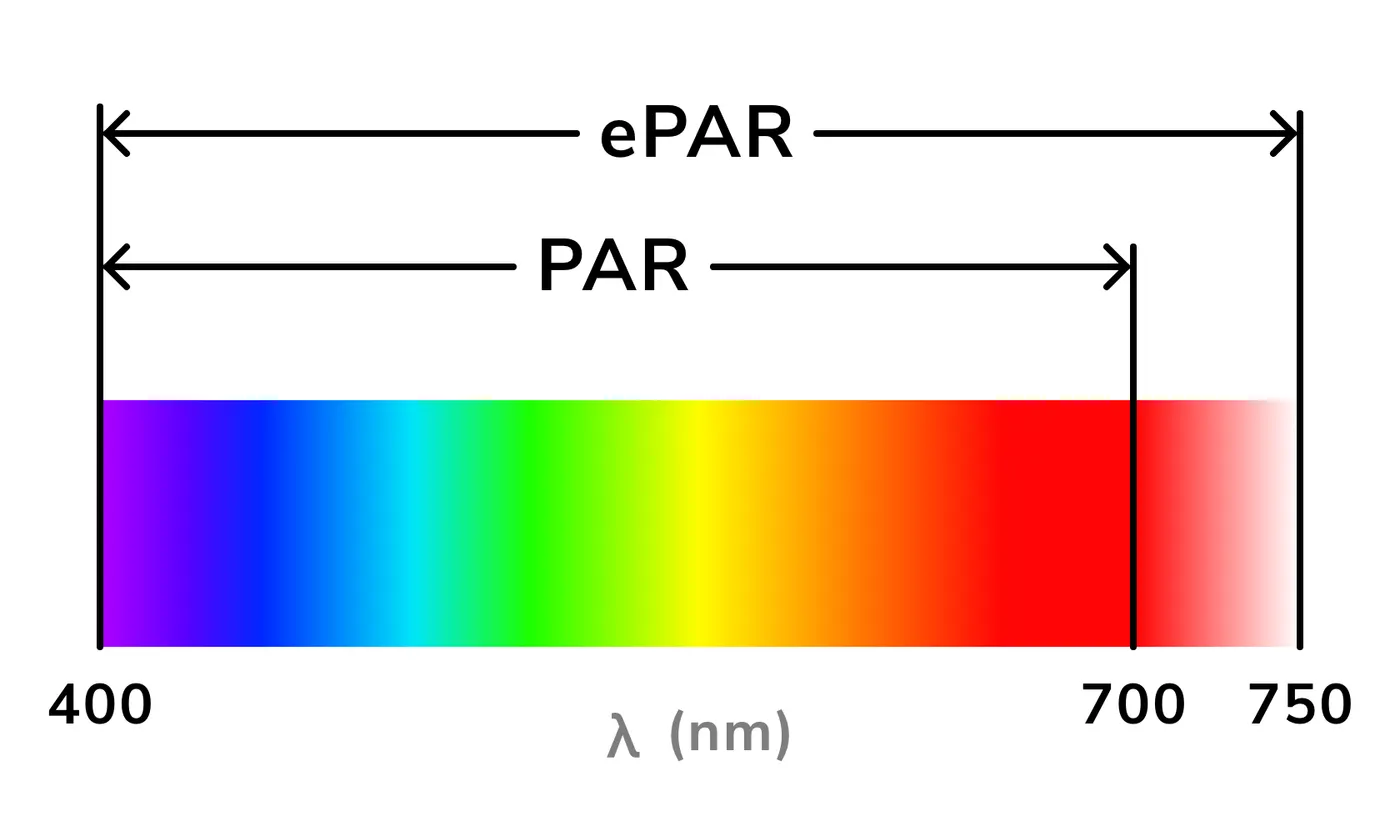
Photosynthetically Active Radiation (PAR) is the part of the light spectrum that plants use for photosynthesis. It covers light wavelengths between 400 and 700 nanometers (nm) and is measured as PPFD.
ePAR
Extended PAR (ePAR) expands the PAR range from 700 to 750 nm by including far-red light. When the ePAR setting is enabled, the the PPFD and DLI values on the main screen automatically switch to their extended equivalents: ePPFD and eDLI.
Measurement Values Available in Photone
You can swap between the following measurements by swiping left or right on the main screen:
PPFD (PAR Meter)
Photosynthetic Photon Flux Density (PPFD) describes how much photosynthetically usable light your plant receives at any given moment. PPFD is measured in micromoles of photons per square meter per second (μmol/m²/s). PPFD is the most relevant measurement in plant lighting and what all PAR meters or quantum meters display.
ePPFD
Extended Photosynthetic Photon Flux Density (ePPFD) is similar to PPFD but accounts for the ePAR range instead of the PAR range. The unit remains the same (μmol/m²/s), but measurement values will be slightly higher if you’ve selected a light source with a high proportion of far-red light such as Sun or LED FS + Red.
DLI
The projected Daily Light Integral (DLI) estimates the total amount of PAR your plants would receive over an entire day if the current light intensity remained constant throughout the configured photoperiod (the number of hours your lamp is on). Adjust the photoperiod using the + and − buttons.
eDLI
The extended daily light integral (eDLI) is similar to the DLI but accounts for the ePAR range instead of the PAR range. The unit remains the same (mol/m²/d), but measurement values will be slightly higher if you’ve selected a light source with a high high proportion of far-red light such as Sun or LED FS + Red.
Illuminance
Illuminance describes the amount of visible light reaching a surface as perceived by the human eye. It is measured in lux (lumen per m²) or foot-candles (lumen per ft²). Lumen describe a light sources total visible light output.
Because illuminance is based on human vision rather than plant response to light, it is not suitable for measuring light for plants. Learn more about why on the Photone blog:

CCT
Correlated color temperature (CCT) refers to the color appearance of a light source and is measured in Kelvin (K). In other words, the CCT describes how "warm" or "cool" a light appears. For example, a lower CCT like 2700 K describes a warm, yellowish light. A higher CCT such as 6500 K describes a cool, bluish light.

The CCT is an important factor in plant lighting as it can influence a plant’s properties during various growth stages such as flowering and fruit production, leaf size and thickness, and the overall plant shape and structure.
The sun's CCT varies throughout the day, ranging from warm reddish-orange light around 3000 K at sunrise and sunset, to cooler white light around 6500 K at midday. This natural cycle occurs due to changes in the sun's position and the amount of atmospheric gasses its light travels through.
All Plant Lighting Metrics Explained
Ever felt like plant light metrics are just a pile of random letters? PAR, PPFD, DLI — and if that weren't enough, there's PPF, PPE, YPF, YPFD, McCree, and even more. They all sound confusing until someone explains them properly — so we broke every one down in plain English. Pop over to our complete grow light metrics glossary and grow with confidence: