Auto-Translate
When it comes to indoor cannabis cultivation, the topic always falls on one subject — light.
Although there are many other environmental factors at play, grow lights bear the brunt of producing lush greenery, plump flowers, and resin-coated buds. Therefore, grow light maintenance should be a top priority.
Read along as we discuss the importance of grow light maintenance and how to maintain your grow lights. Not only will you discover two proven methods, but you'll understand how a proper light meter determines when it's time for a routine checkup.
Contents
Why Grow Light Upkeep is Necessary
Just like a well-tuned engine, grow lights need a bit of attention every so often.
Here are a few examples of the result of neglecting grow light maintenance:
- Reduced yield
- The same electricity bill for less light output
- Decreased plant vigor
- Weak stems and branches
- Decreased resistance to pests and disease
Aside from the effect on plants, grow light maintenance is crucial for your safety as damaged and dirty grow lights and ballasts may catch on fire.
As you can see, it's in your best interest to maintain your grow lights to ensure optimal light output, reliable operation, and the safety of yourself and others.
What Exactly is Light Output Depreciation?
Every grow light emits less light the longer it is in use. This is called light output depreciation or lamp lumen depreciation (LLD), as general lighting measures light output in lumens. For plants, the light output that counts is PPF (photosynthetic photon flux), but it decreases in the same way.
The lifespan of a grow light is rated in hours. Among HID lights, high-pressure sodium (HPS) bulbs last the longest with a rated lifespan of roughly 24,000 hours.
Metal halide (MH) bulbs, on the other hand, are typically rated for 10,000–20,000 hours.
Light Output Depreciation For Common Grow Lights
How much light a grow light loses depends on its technology. The chart below shows the typical light output of common grow lights over their rated lifespan:
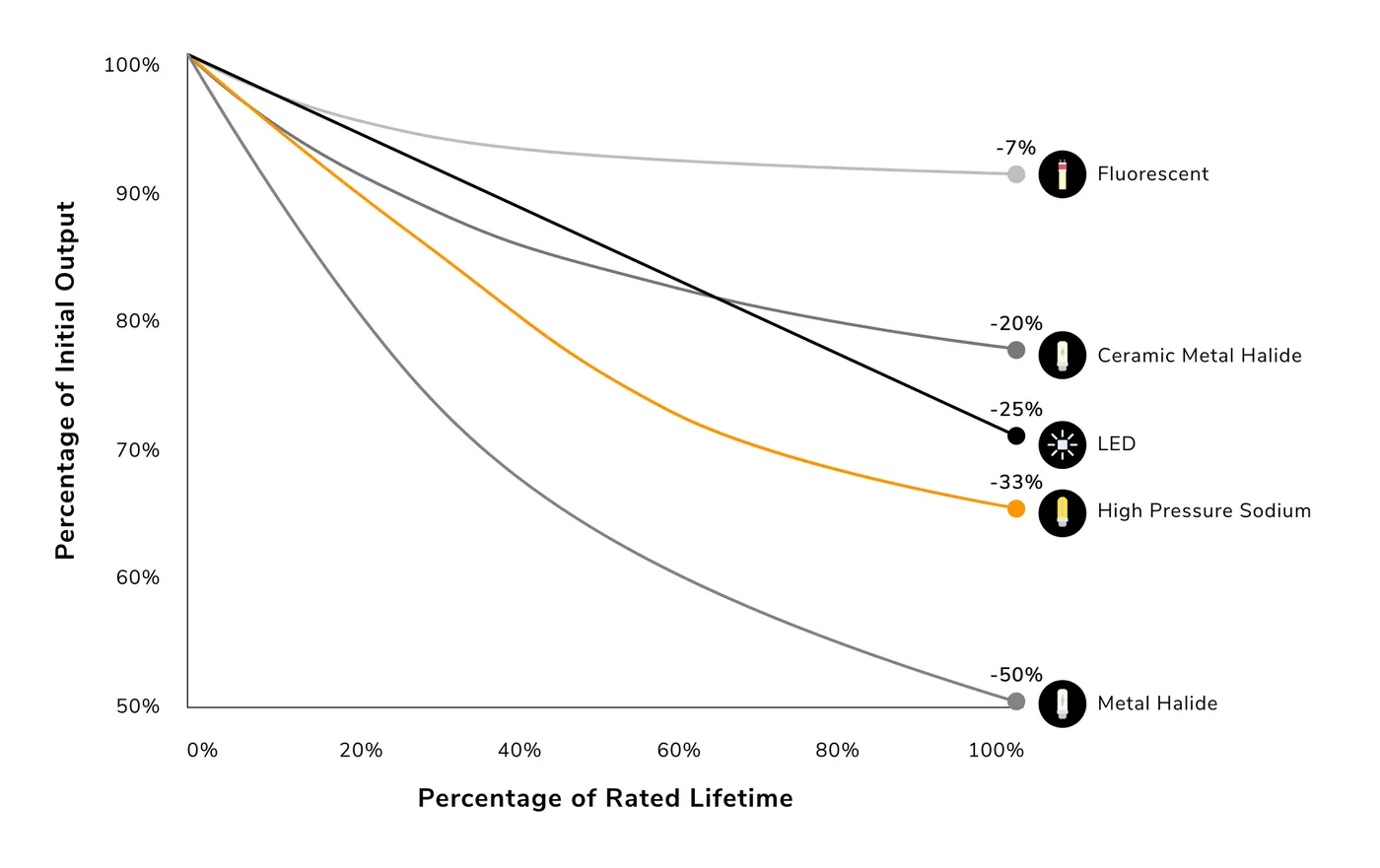
MH bulbs lose the most light: about half of their initial output by the end of their rated lifespan. HPS bulbs lose about a third, even though they last nearly twice as long. How quickly a grow light depreciates also depends on how it is operated: Room temperature, humidity, the mounting position (vertical or horizontal) and the type of ballast (magnetic or digital) all play a role.
LED grow lights last much longer than HID lights, with a rated lifespan of around 50,000 to 100,000 hours. Their light output decreases as well, just more slowly. LED lifetimes are usually specified as L70 or L90: the number of hours after which the light output has dropped to 70% or 90%.
How to Determine When You Need to Perform Routine Grow Light Maintenance
When you step into your indoor garden, it's impossible to determine if your grow lights are emitting sub-optimal light.
Since your eyes aren't up for the task, the job falls on a light meter's shoulders. So whenever you install a new lamp or grow light, take an initial PPFD measurement and note down the value along with the date. With this benchmark of the grow light's maximum light output, take the same measurement every few weeks: in the same spot, at the same distance to the light and with the same dimmer setting.
You'll soon notice your grow lights produce less light over time, thus requiring a bit of maintenance on your end.
How to Maintain Your Grow Lights
Next, let's discuss how to maintain your grow lights.
Luckily for you, each of these maintenance methods is easy to accomplish. Remember, it's easy to delay regular grow light maintenance; however, the health of your plants is in your hands.
Routine Lamp and Ballast Cleaning
One of the best grow light maintenance tips is to clean your grow lights and ballast after each harvest. Cleaning makes sense for any technology of grow light, as even a tiny build-up of dust can lead to measurable loss in light output.
Typically, the indoor growing cycle lasts between 2.5 and 5 months — depending on plant genetics, if clones were used, and so forth. As such, take the time after harvest as a sort of spring cleaning, if you will.
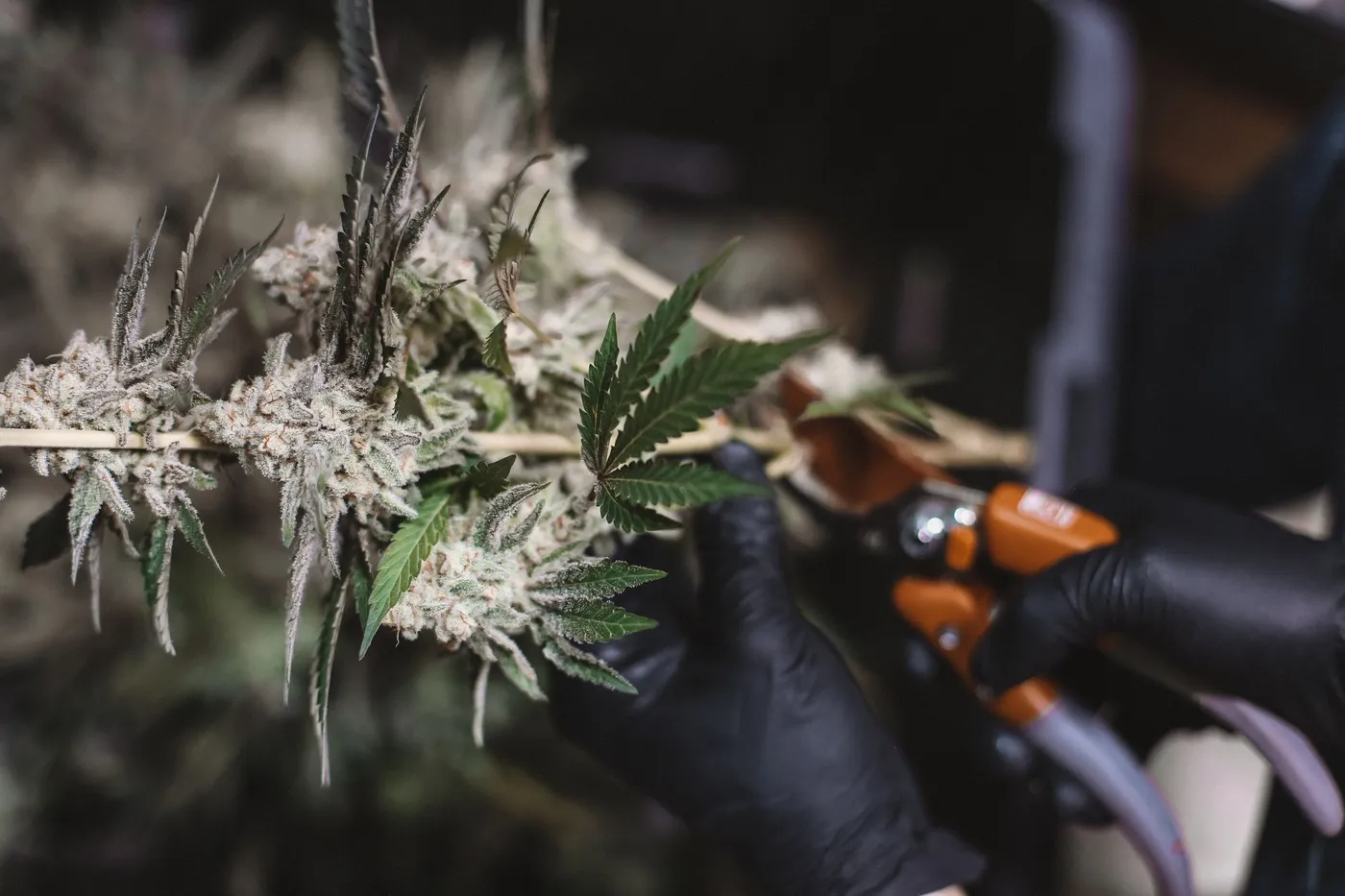
Lamp and ballast cleaning is simple, and you'll be surprised by how much gunk, grime, and dust accumulate on your grow lights.
First, look over your grow light for any noticeable damage. On LED grow lights, look for dead or flickering LEDs. On HID grow lights, remove the lamp from the hood first.
Here's a list of what to look for on HID grow lights:
- Blackened arc-tube in the grow lamp
- Burn marks on the base and socket of the grow lamp
- Bluish-tint (or any discoloration) on the metal components within the bulb
Next, use a non-abrasive cloth to wipe away any dust buildup. Furthermore, never wipe down the base or the socket with a cleaning solution. Remember, you're dealing with electricity, so leave the glass cleaner in the cabinet where it belongs.
Now that the lamp is refreshed, it's time to take a look at the ballast or LED driver. Remove the dust from its heat sinks and vents, as they keep the internal components cool.
If the heat sinks are clogged or damaged, the ballast or driver may overheat, which drastically reduces the lifespan of your grow light system.
By simply cleaning off the dust on the lamp and the heat sinks, your grow lights will be prepared for the next growing season.
Scheduled Lamp Replacement
As with all things in life, everything has a lifespan.
As described above, especially HID grow lights lose a significant amount of light output during their rated lifespan – to a point where it makes no economic sense to keep running them.
In the case of grow lamps, it may be challenging to determine when you must replace a grow light. The rule of thumb is to replace HID lamps every 9–12 months. However, this is just an estimate. LED grow lights usually last for many years, but their light output decreases as well.
Therefore, it's best to use a light meter to determine when a lamp needs to be replaced. If the light output has dropped below a certain threshold, you can quickly perform the scheduled lamp replacement.
Once you've determined it's time to replace your grow lamp, make sure you store the used bulb in an adequately marked package. If a new grow light malfunctions, you can use the used bulb as a spare until you buy a new lamp.
Tips When Performing Grow Light Maintenance
Before you begin replacing a lamp or cleaning a grow light system, here are a few tips to ensure your safety:
- Always unplug the grow light system from the primary power source
- Let the lamp cool down before touching it
- Never use your eyes to determine if grow lights need to be cleaned or replaced — that's the job of a proper light meter
- Follow the manufacturer's instructions when replacing and cleaning grow lamps
More Than Just a Gut Feeling
By using our accurate light meter app Photone, you'll have objective and actionable results at your fingertips.
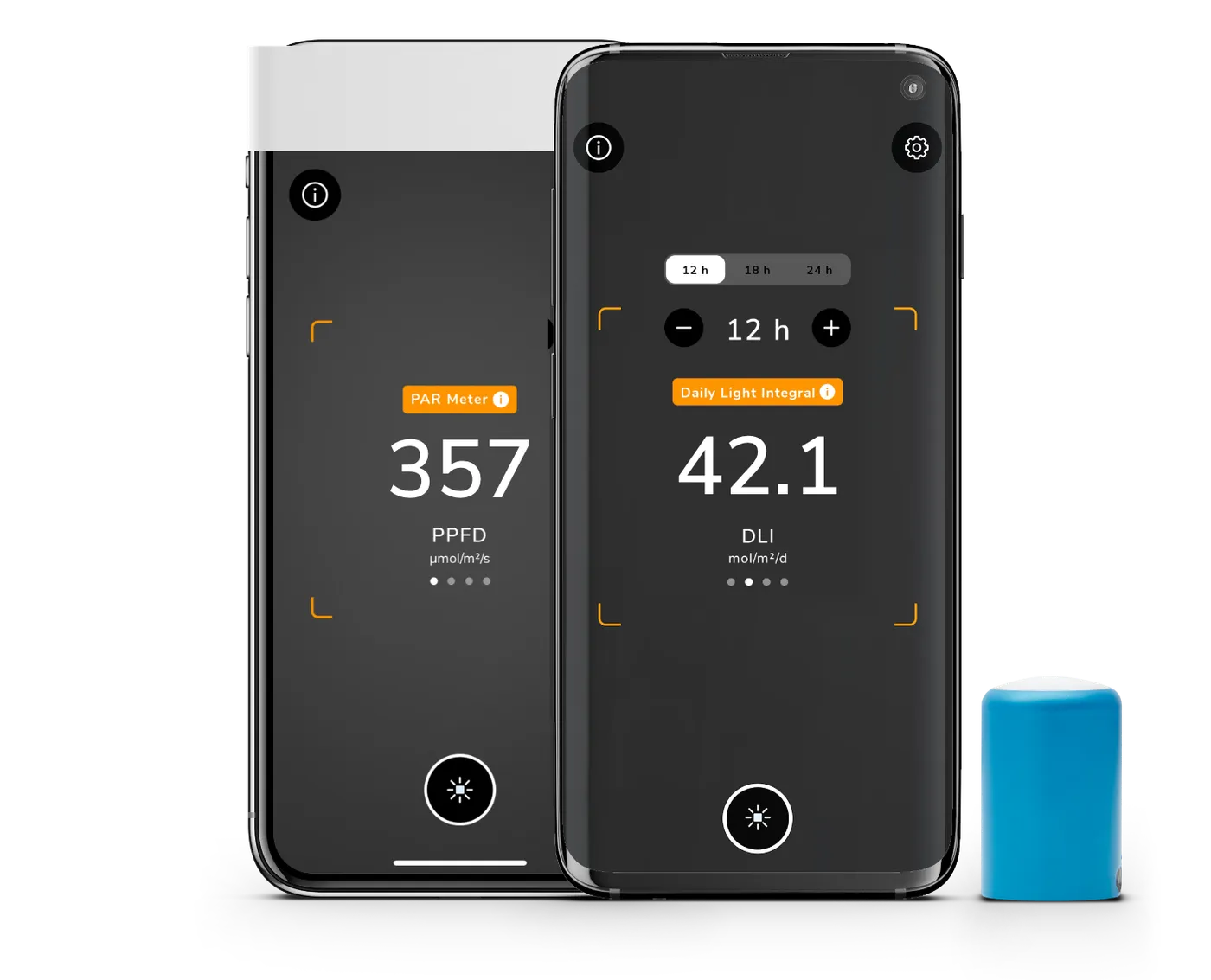
Less light output means unhappy plants that can't reach their potential. Furthermore, your wallet will feel the burn as you continue to pay more money per usable light unit. If you're ready to optimize your garden in an instant, look no further than our all-in-one light meter app.